The problem.
Inside every iconic private company are employees holding options they can’t afford to exercise.
~70%
of eligible employee stock-option grants at venture-backed private companies went unexercised.Basis: Carta, Q4 2024.
Cap-U Fuel Innovation 100
Unlock discounted access to category-defining private companies by financing the employees who build them.







Selected companies underlying executed employee financing exposures as of 2 October 2026. Not a complete portfolio listing. Source: Fuel Venture Capital / Capital United. Logos are for identification only and do not imply endorsement.
The market
Inside every iconic private company are employees holding options they can’t afford to exercise.
of eligible employee stock-option grants at venture-backed private companies went unexercised.Basis: Carta, Q4 2024.
Multiply that by every unicorn, and it becomes a market.
of trapped pre-exit equity, which the Fund seeks to access at a discount to latest financing valuations.Source: EquityBee estimate communicated to Fuel, October 2026.
Source: Carta, Q4 2024. Eligible grants are fully vested and in the money. Employees exercised 32.2%; the remaining 67.8% is rounded to ~70%. This market estimate is not an actual fund term or guaranteed outcome. Non-exercise can have multiple causes.
Source: EquityBee estimate communicated to Fuel Venture Capital, as reported by Fuel on 2 October 2026. The $40B figure estimates trapped pre-exit equity liquidity. Market sizing is an illustrative estimate, not a guaranteed outcome.
Why now
Companies are staying private longer, while employees face exercise and tax costs.
Median age at public listing for technology companies rose from 4 years in 1999 to 12 years in 2025, extending the path to employee liquidity.
Source: Jay Ritter · University of Florida Tech IPOs & direct listings · Table 4aMedian pre-money valuation at a U.S. venture-backed IPO reached $1.05B in 2025, up from $160M in 2004. Employee equity is reaching greater value before liquidity.
NVCA 2026 Yearbook · PitchBook data U.S. VC-backed IPOs · Pre-money valuationsExercising cost and associated tax obligation can represent one of the largest financial decisions employees face in their lifetime.
Secfi · 2021 State of Stock Options Client sample as of 17 November 2021Market conditions change and are outside the fund’s control. Nothing here predicts or guarantees that an IPO window will remain open, that a company will complete a listing, or that a portfolio company will achieve a liquidity event. Past market cycles are not indicative of future results.
You invest in one fund that provides non-recourse employee stock option financing across selected private companies. We don’t buy shares at market price: we create the transaction at a structurally lower basis.
After fees, carried interest & expenses
No monthly payments. Repayment requires a liquidity event and sufficient proceeds.
Explore exit channelsThe Fund provides employees with non-recourse capital that covers the cost of their option exercise and agreed-upon tax obligations. The financing contracts set rights to future proceeds under the employee financing agreements.
Each employee contract sets its own terms for repayment of original financing, accrued interest and participation in available future proceeds.
Capital, returns and timing are not guaranteed. Investor distributions follow the fund’s offering terms.
Price comparison only; a discount is not a return.
The employee owns the shares. Blue represents the fund’s contractual participation.
3,000 × $66.67 ≈ $200,000 kicker reference value
A paper reference calculation, not cash received or a fund return. This example also assumes 4% accrued interest, payable subject to the contract and available proceeds.
Hypothetical employee financing, separate from the minimum fund investment. Assumes $200,000 funds the exercise only (tax funding excluded), a $20 exercise price, a $66.67 preferred-price reference and a kicker modelled as 30% of the resulting shares’ reference value. Before fees, expenses and any appreciation. Actual terms vary.
The preferred-share benchmark may differ from the value or realizable proceeds of the employee’s shares. Repayment and equity participation require a liquidity event and sufficient proceeds. No repayment or return is guaranteed; investors may lose some or all invested capital.
Source: Cap-U Fuel Innovation 100 presentation, V17, 28 September 2026, slide 4.
From a broader company universe to selected employee financings, then additional contracts as conviction develops.
selected companies listed in the broader universe
Highlighted companies represent selected executed employee-financing exposures. Other companies shown are illustrative underwriting targets, not holdings or commitments. This is not a complete portfolio listing. Logos are for identification only and do not imply endorsement.
Building toward
companies in the
target portfolio
These seven selected exposures form part of the portfolio being built.
Employee and contract checks inform each financing decision. Monitoring continues after funding.
Exposure to a company can grow through multiple employee contracts, with additional capital allocated selectively.
Target capital allocation
Targeted for deployment in the first 12 months.
Held to build selected positions as conviction develops.
Additional financings can build exposure to the same company over time.
The broader strategy considers a universe of 100 innovative private companies; 84 selected companies are listed here. Universe inclusion is not an investment commitment. The displayed exposures are selected examples, not a complete portfolio listing. Portfolio size is a target and may not be achieved.
Potential routes only. Availability, timing and proceeds depend on company and contract restrictions, market conditions, regulatory requirements and buyer demand. Liquidity and investor distributions are not assured.
Cap-U Fuel Innovation 100 invests exclusively in employee option-exercise financings. Repayment and any return depend on a liquidity event and sufficient proceeds; company failure, valuation declines and counterparty risk can cause loss of principal. Contract terms vary. Non-recourse financing is subject to contractual exceptions and does not remove employee tax obligations. The employee-contract repayment sequence is separate from investor distributions, which follow the fund’s offering terms, after fees and expenses. Liquidity and distributions are not assured, and investors may lose all their capital.
Investor benefits
Through your CapU access-series interest, you gain exposure to non-recourse employee financing. The financing contracts set rights to repayment of capital, accrued interest and participation in available future proceeds.
Repayment and any return depend on a liquidity event and available proceeds. Investors may lose some or all of their capital.
We don’t buy shares at market price,
we create the transaction at a structurally lower basis.
Target measured against the company’s most recent secondary or preferred share price. Terms vary; the target may not be achieved. Discounts are not returns and do not protect against loss.
Diversified exposure. From a universe of the 100 most innovative private companies, each fund typically finances employee contracts across a target portfolio of 40–50 companies, selected and actively managed by our team.
Portfolio size is a target and may not be achieved. Diversification does not assure a profit or eliminate risk.
Structural protection. The contract gives the fund repayment priority ahead of the employee.
Terms vary by transaction. Priority applies to available proceeds and does not guarantee repayment or protect against loss.
You own a fund interest, not company shares. Investments are speculative and illiquid, and investors may lose some or all invested capital. Definitive offering documents govern terms, fees, carried interest and expenses.
Select your profile to start an inquiry.

Fuel Venture Capital · Since 2017
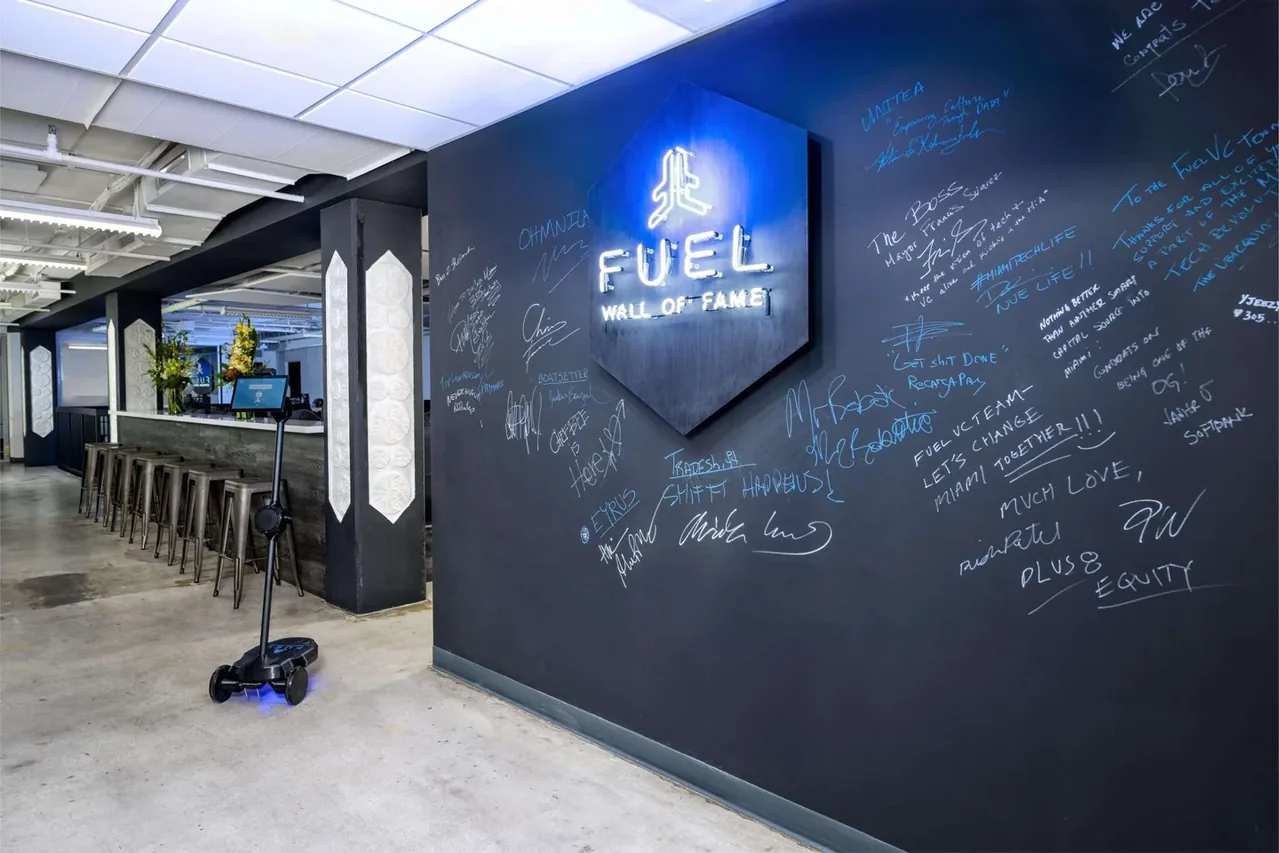
Founded by Jeff Ransdell after his career at Merrill Lynch, Fuel brings private-company investing experience, founder relationships and active board involvement.

Fuel’s broader platform · As of 31 December 2025
 Office feature
 Founder interview
 Founder podcast
 CIO commentary
 CookUnity partnership
 Television commentary
Selected coverage of Fuel and its leadership. Media appearances do not imply endorsement of the Fund.
Source: Fuel Venture Capital. Figures reflect Fuel’s broader platform, not the assets or holdings of Cap-U Fuel Innovation 100. The Fund uses a different strategy (employee option financing versus direct equity investment) and has no standalone performance record. Past performance and prior firm experience are not indicative of future fund results. Prior firm affiliations do not imply endorsement or any continuing relationship.
Structural Comparison
Compare employee option financing with a special purpose vehicle (SPV) or a secondary share purchase. The underlying Fuel fund invests through EquityBee-managed financing series that enter financing contracts with employees who exercise their stock options.
Comparison is illustrative and generalized for informational purposes. Individual SPV, secondary and fund structures vary and may differ materially from the characteristics shown. Portfolio size, entry discounts and deployment figures are targets, are not guaranteed and may not be achieved. Entry discounts are not an investor return or the Fund’s performance record. Discounts to valuation do not protect against principal loss, and diversification does not assure a profit. Investors own a fund interest, not the employee’s shares directly. Repayment priority is subject to contract terms and available proceeds. Review the confidential offering documents before any investment decision.
Fund information
Eligibility, minimum investment and indicative timing.
Two optional one-year extensions
Summary only. Definitive offering documents govern. The five-year fund term includes an option for two additional one-year extensions; no liquidity event or distribution date is assured.
View full fund informationYou hold interests in a CapU access series, which holds a limited partner (LP) interest in the underlying Fuel fund. The underlying Fuel fund invests through EquityBee-managed financing series that enter contracts with employees to finance stock option exercises. Your access-series interest provides exposure to those contracts, rather than direct ownership of any individual company’s shares.
A direct secondary purchase buys existing company shares at an agreed price. Cap-U Fuel Innovation 100 instead finances employee option exercises under contracts that set repayment rights and participation in available share proceeds. You hold an interest in a CapU access series. An entry-price discount is a comparison with a stated benchmark, not an immediate gain or a guarantee of returns.
Interests are offered only to accredited investors under Rule 506(c), subject to verification of accredited investor status and the requirements in the offering documents. The QP series is for accredited investors who are qualified purchasers; the QC series is for accredited investors who are qualified clients. The minimum investment is $200,000, subject to the offering documents. View investment structure.
Employee financing contracts provide for repayment of capital, accrued interest and a negotiated participation in equity proceeds. The terms vary by transaction. Returns depend on sufficient proceeds from underlying liquidity events and are subject to fund fees and expenses.
The underlying Fuel fund term is five years, with an option for two additional one-year extensions, subject to the definitive offering documents. Distributions depend on underlying liquidity events, available proceeds and the applicable underlying fund and access-series terms. They may occur later or not at all. The underlying Fuel fund term does not guarantee a distribution date or a right to redeem your investment.
The target portfolio is 40–50 companies drawn from an approximately 100-company underwriting universe. Proposed terms include an 18-month investment period, with 60% targeted for initial deployment in the first 12 months and 40% reserved to build selected positions. These targets may change or go unmet. The 10% per-company cap applies to capital deployed at cost, not a typical position size. Definitive offering documents govern.
Approximately 2% management fee and 20% carried interest at the underlying Fuel fund level; no additional management fee or carried interest at the CapU access-series level. Investors bear series operating and organizational expenses plus their share of underlying fund fees and expenses, as described in the offering documents. This is a summary only; definitive offering documents control. Review those documents for the calculation basis and timing of management fees, carried interest and expenses before making an investment decision. Terms may change.
Private investments are illiquid and can lose some or all of their value. Risks include company performance, valuation changes, employee and contractual risks, and the absence of a liquidity event. Repayment generally depends on proceeds from the financed shares, subject to contractual exceptions. This does not protect fund investors from loss. Diversification does not eliminate risk.
Summary only; definitive offering documents control. Portfolio-construction, concentration, fee and liquidity information describes proposed or target terms and may change. The fund term is five years, with an option for two additional one-year extensions, subject to the definitive offering documents. No liquidity event or distribution date is assured.
Your next conversation
Speak with Duncan about the strategy, fund terms and the current offering documents.
Cap-U Fuel Innovation 100 is offered only to accredited investors as defined under SEC Regulation D. Please review the applicable access-series and underlying Fuel fund offering documents before any investment decision.

Partner, Business Development
Capital United

CEO & Founder

President & Founder

Chief Financial Officer
Reg D · Rule 506(c)
Fields marked * are required.